

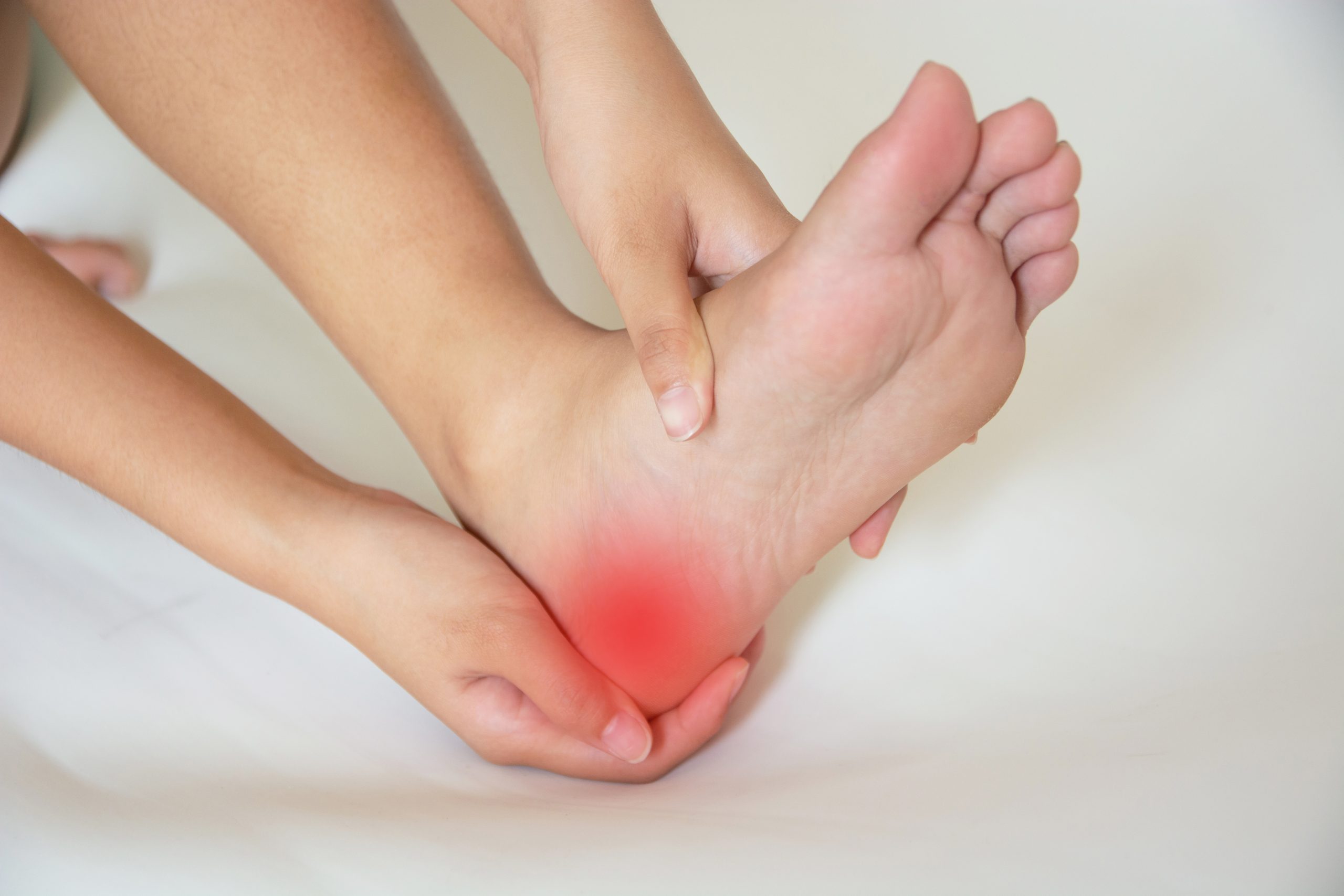
Heel pain is one of the most common foot complaints, affecting up to 10% of the population at some point in their lives【1】. For many, it shows up first thing in the morning—sharp, stabbing pain with those first steps out of bed—or after prolonged standing or activity. Most people (and even many providers) assume it’s plantar fasciitis. But the truth is, not all heel pain is plantar fasciitis, and a misdiagnosis can lead to ineffective treatment, delayed recovery, and chronic frustration.
At MN Spine and Sport in Woodbury, MN, we take a comprehensive, evidence-based approach to diagnosing and treating heel pain. From advanced rehab strategies to Class IV laser therapy, shockwave, and custom movement assessments, we uncover the root cause and get you back on your feet—literally.
Let’s dive into the real causes of heel pain, what makes them different, and how our team can help you heal without relying on injections, surgery, or endless rest.
👉 Struggling with heel pain? Don’t guess—get answers. Schedule your appointment now
Common Heel Pain Diagnosis: It’s Not Always Plantar Fasciitis
Plantar fasciitis is the most widely recognized heel pain diagnosis—but it’s not the only one. In fact, there are many potential causes of heel pain, and they often present with overlapping symptoms. Here are some of the most common conditions that can masquerade as (or occur alongside) plantar fasciitis:
- Plantar Fasciitis
The classic culprit. Plantar fasciitis involves inflammation or degeneration of the plantar fascia, a thick band of connective tissue that runs along the bottom of the foot and supports the arch.
Symptoms:
- Pain in the medial heel (inner bottom of the heel)
- Worse with first steps in the morning
- Tenderness near the heel bone
- Aggravated by prolonged standing or walking
Research shows that plantar fasciitis is more accurately a fasciosis—degenerative rather than inflammatory【2】—meaning treatment should focus on tissue remodeling rather than just inflammation reduction.
- Heel Fat Pad Syndrome
This condition occurs when the natural fatty padding under the heel becomes atrophied, inflamed, or displaced, reducing shock absorption.
Symptoms:
- Deep, bruised feeling in the center of the heel
- Pain worsens with walking on hard surfaces
- Pain not as severe with first steps in the morning (unlike plantar fasciitis)
Studies show that heel fat pad atrophy is more common in older adults, runners, and people who walk barefoot on hard floors regularly【3】.
- Calcaneal Stress Fracture
This is an overuse injury of the heel bone (calcaneus), common in runners, military recruits, or people with sudden increases in activity.
Symptoms:
- Deep, constant ache in the heel
- Pain worsens with activity and improves with rest
- Pain may be present even when not weight-bearing
Imaging may be needed to confirm this diagnosis, particularly in active individuals with risk factors for bone stress injuries.
- Tarsal Tunnel Syndrome
Tarsal tunnel syndrome is a nerve entrapment condition where the posterior tibial nerve is compressed as it travels around the inside of the ankle.
Symptoms:
- Burning, tingling, or shooting pain into the heel or arch
- May radiate into the toes
- Worse at night or after prolonged standing
This condition is often misdiagnosed as plantar fasciitis, but treatments differ significantly since it involves nerve compression, not tissue degeneration.
- Achilles Tendinopathy and Insertional Heel Pain
Pain at the back of the heel may be related to inflammation or degeneration of the Achilles tendon or its insertion on the calcaneus.
Symptoms:
- Pain and stiffness at the back of the heel, especially in the morning
- Swelling or a bony bump at the tendon insertion
- Worse with uphill walking or running
This condition may also involve retrocalcaneal bursitis or Haglund’s deformity and requires targeted tendon care, not plantar fascia treatment.
- Baxter’s Nerve Entrapment
Baxter’s nerve is a small branch of the lateral plantar nerve, and its entrapment can cause heel pain that mimics plantar fasciitis.
Symptoms:
- Medial heel pain, often more sharp or burning
- No relief with typical plantar fasciitis care
- Weakness in the small foot muscles
Studies estimate up to 20% of chronic heel pain may be caused by Baxter’s nerve entrapment rather than plantar fasciitis【4】.
Why Accurate Diagnosis Matters
Treating all heel pain like plantar fasciitis is like throwing darts blindfolded—you might hit the target, but more often, you’ll miss.
A 2019 article in the British Journal of Sports Medicine emphasized the importance of differentiating between heel pain diagnoses, noting that a one-size-fits-all treatment approach can lead to poor outcomes and unnecessary chronicity【5】.
At MN Spine and Sport, we take a holistic, functional approach that includes:
- Detailed history and activity analysis
- Biomechanical evaluation of foot, ankle, knee, and hip
- Orthopedic testing to rule out fractures or nerve involvement
- Gait analysis and functional movement screening
Only once we’ve identified the root cause do we create a personalized treatment plan that addresses it directly.
Effective, Non-Surgical Heel Pain Treatments at MN Spine and Sport
We’re proud to offer a wide range of research-supported, results-driven therapies to treat heel pain—no matter the cause.
✅ Class IV Laser Therapy
Our high-powered laser therapy uses specific wavelengths to:
- Stimulate cellular repair (ATP production)
- Reduce inflammation and pain
- Accelerate healing in soft tissues
Laser therapy is supported by numerous studies for treating plantar fasciitis, Achilles tendinopathy, and soft tissue injuries【6】.
✅ Shockwave Therapy (ESWT)
Shockwave therapy uses acoustic pulses to break up scar tissue, stimulate healing, and promote blood flow.
Research from the Journal of Orthopaedic Research shows that shockwave therapy is effective for chronic plantar fasciitis and insertional Achilles tendinopathy, especially when other treatments fail【7】.
✅ Rehabilitation and Corrective Exercise
We provide board-certified rehab protocols to restore function, strengthen supporting structures, and correct faulty movement patterns.
Treatments may include:
- Eccentric loading for Achilles tendinopathy
- Arch stabilization exercises
- Calf flexibility and strength training
- Foot intrinsic muscle activation
- Progressive loading for plantar fascia or fat pad recovery
✅ Myofascial Release and Manual Therapy
Targeted manual therapy helps release tight fascia, mobilize joints, and improve circulation. Techniques include:
- Instrument-assisted soft tissue mobilization (IASTM)
- Active Release Technique (ART)
- Trigger point therapy for calf and foot muscles
✅ Custom Orthotic Recommendations
Poor foot mechanics are often at the root of heel pain. We assess:
- Foot posture and arch alignment
- Shoe wear patterns
- Load distribution
If necessary, we recommend custom orthotics or footwear modifications to correct imbalances and reduce stress on the heel.
✅ Dry Needling and Acupuncture
Dry needling and acupuncture help release tight muscles and stimulate healing in chronic conditions. These methods are especially effective for:
- Plantar fasciitis
- Baxter’s nerve entrapment
- Tarsal tunnel syndrome
A 2020 review in Pain Medicine concluded that dry needling reduces heel pain and improves foot function in patients with chronic plantar fasciitis【8】.
Why MN Spine and Sport?
We offer:
🧠 Board-certified rehab specialists
🦶 Multimodal care for foot and heel conditions
🔬 Advanced technologies like laser and shockwave
👟 Movement-focused, functional evaluations
🤝 Compassionate, personalized care plans
We’re not just treating your symptoms—we’re helping you get your life back, one step at a time.
When Should You Schedule an Appointment?
If you’re experiencing:
- Heel pain that isn’t improving with rest
- Pain with the first few steps in the morning
- Pain after standing, walking, or running
- Tingling or burning sensations
- Pain that persists despite home care
… it’s time for an expert evaluation. The longer heel pain goes untreated or misdiagnosed, the harder it becomes to reverse.
Don’t Wait—Step Toward Relief Today
At MN Spine and Sport, we’ve helped thousands of patients overcome heel pain and get back on their feet—without relying on drugs, injections, or surgery.
Your pain is real. Your recovery is possible. And the right diagnosis is the first step.
👉 Schedule your consultation today and start walking without pain again.
References:
- Riddle DL, et al. “Risk factors for plantar fasciitis: a matched case-control study.” J Bone Joint Surg Am. 2003;85(5):872-7.
- Lemont H, Ammirati KM, Usen N. “Plantar fasciitis: a degenerative process (fasciosis) without inflammation.” J Am Podiatr Med Assoc. 2003;93(3):234-7.
- Kharwadkar N, et al. “Plantar heel pain in older adults: fat pad atrophy—a misunderstood condition.” Foot Ankle Int. 2020;41(6):664–669.
- DiMarcangelo MT, Yu TC. “Diagnostic imaging of heel pain and plantar fasciitis.” Clin Podiatr Med Surg. 2005;22(1):105-25.
- McMillan AM, et al. “Differential diagnosis of heel pain in adults.” Br J Sports Med. 2019;53(19):1232-1236.
- Stergioulas A, et al. “Effects of low-level laser therapy and eccentric exercises in the treatment of recreational athletes with chronic Achilles tendinopathy.” Am J Sports Med. 2008;36(5):881-7.
- Gerdesmeyer L, et al. “Radial extracorporeal shock wave therapy is safe and effective in the treatment of chronic recalcitrant plantar fasciitis.” Am J Sports Med. 2008;36(11):2100-2109.
- Cotchett MP, et al. “Effectiveness of dry needling and injections of myofascial trigger points associated with plantar heel pain: a systematic review.” Pain Med. 2020;21(9):1971-1983.

GET STARTED
READY TO SCHEDULE NOW?
If you are a new patient, please fill out the New Patient Intake Form.