

Recovery isn’t just about “waiting it out.” Your body does need time to heal—but the rate and quality of recovery are heavily influenced by a handful of modifiable factors: how you move, how you sleep, how you load tissues, how you manage stress, and whether your plan matches your diagnosis.
In this blog, we’ll cover:
- The most common (and most overlooked) reasons recovery stalls
- What research shows can accelerate recovery
- How MN Spine and Sport approaches recovery with a multi-modality, individualized plan
Important note: This is educational information and not personal medical advice. If you have severe symptoms, progressive weakness, bowel/bladder changes, or worsening numbness/tingling, seek urgent medical evaluation.
Why Recovery Slows Down
1) Too Much Rest (or Immobilization for Too Long)
Rest has a role early on—especially after acute injury. But prolonged rest often creates a recovery trap: stiffness increases, strength drops, tissues become less tolerant, and confidence in movement decreases.
Modern rehab emphasizes appropriate early movement and progressive loading rather than extended immobilization for many musculoskeletal conditions. Clinical rehabilitation literature notes that traditional bed rest/immobilization approaches can contribute to weakness, stiffness, and delayed return to activity.
What it looks like in real life:
You “protect” an area for weeks, avoid bending or lifting, and then when you try to return to normal life, the pain returns because the body hasn’t rebuilt capacity.
2) Doing Too Much, Too Soon (Overloading Before You’re Ready)
The opposite problem is also common: people feel slightly better, assume they’re healed, and jump back into full training, long workdays, or weekend projects. Tissues that are still remodeling can’t tolerate the sudden spike in load, and recovery resets.
One of the most consistent principles in rehab science is that tissues adapt best with graded exposure—not big swings between inactivity and overactivity.
What it looks like in real life:
“Monday I felt fine, Wednesday I did everything, Thursday I’m back to square one.”
3) Poor Sleep (Recovery Happens When You’re Not “Doing”)
Sleep is one of the strongest “invisible levers” in recovery. Sleep disruption is linked to higher pain sensitivity, poorer tissue recovery, and worse rehab tolerance. While this relationship can be complex, sports medicine and injury recovery guidelines frequently place sleep among the core recovery pillars.
If your sleep is consistently poor, your body may struggle to regulate inflammation, manage pain sensitivity, and build new tissue effectively. (In practice, we often see sleep as the difference between “slow progress” and “steady progress.”)
4) High Stress Load and Poor Pain Coping (The Brain–Body Recovery Link)
Stress doesn’t mean “it’s all in your head.” It means your nervous system is responding to threat—physical and emotional—and that can amplify pain and slow progress.
Research consistently links psychosocial factors like fear of movement, catastrophizing, depression, and low self-efficacy with worse pain/disability outcomes in chronic low back pain and persistent pain populations.
What it looks like in real life:
- You tense up and brace all day
- You stop trusting your body
- You avoid movements that are safe but uncomfortable
- Your nervous system stays “on guard,” making flare-ups more likely
5) Nutrition Gaps (Not Enough Protein, Calories, or Key Nutrients)
Tissue repair is metabolically expensive. Without adequate nutrition—especially protein intake and overall energy availability—rebuilding can slow.
Sports medicine resources emphasize that nutrition strategies should be part of standard care for injury recovery and rehab.
Broader musculoskeletal health literature also highlights the role of nutrition and physical activity patterns in supporting musculoskeletal function and resilience.
What it looks like in real life:
- Skipping meals because you’re busy
- Low protein intake
- Trying to lose weight aggressively while injured
- Not hydrating well (which can worsen fatigue and perceived soreness)
6) Inconsistent Rehab (Random Effort = Random Results)
One great workout doesn’t fix an injury—consistent, appropriately dosed rehab does. Recovery tends to slow when rehab is:
- Too sporadic
- Too intense to sustain
- Not progressed over time
- Focused only on symptoms (pain relief) without rebuilding capacity
7) Wrong Diagnosis or One-Size-Fits-All Care
If the actual driver of pain is missed—mobility restriction, tendon overload, nerve irritation, joint sensitivity, movement control deficits, or persistent pain mechanisms—then even “good treatment” can feel disappointing.
This is why a clear exam matters: the plan should fit the tissue, stage, and goal (work demands, sport demands, home demands).
What Accelerates Recovery (What’s Been Shown to Help)
1) Early, Appropriate Movement and Progressive Exercise
Across many conditions, the best long-term outcomes come from the right mix of activity, progressive loading, and functional exercise (not just passive care). Evidence comparing early vs delayed rehab in post-op populations often shows benefits in range of motion and stiffness risk with early motion, while other outcomes may be similar—highlighting that timing and dosage matter.
Even outside surgery, the principle holds:
- Start with what you can do
- Progress volume/intensity gradually
- Build strength, tolerance, and confidence
Key takeaway: Movement is medicine—when it’s the right movement at the right time.
2) A Plan That Addresses Both Tissue and Nervous System
When psychosocial factors are present (fear, catastrophizing, low confidence), recovery improves when care includes:
- Clear education
- Reassurance + realistic expectations
- Graded exposure to feared movements
- Progressive wins that build self-efficacy
Research highlights pain self-efficacy as an important mediator between psychosocial factors and disability in chronic low back pain.
3) Nutrition Support to Match the Healing Phase
Nutrition isn’t a “nice extra”—it’s part of the recovery equation. Guidance in sports injury recovery emphasizes implementing nutrition strategies as part of standard care for rehab.
A practical baseline that often helps:
- Adequate total calories (don’t underfuel)
- Protein at each meal
- Fruits/vegetables for micronutrients
- Hydration for performance and recovery
4) Consistency and Progress Tracking
What gets measured gets improved. Recovery accelerates when you track:
- Pain trends (not single moments)
- Sleep quality
- Range of motion
- Strength/endurance markers
- Return-to-activity milestones
This keeps rehab in the “Goldilocks zone”: challenging enough to adapt, not so much that you flare for days.
5) Combining the Right Modalities With Active Rehab
Modalities can be valuable for:
- Short-term pain modulation
- Improving tolerance to movement
- Reducing stiffness and soft-tissue sensitivity
- Supporting function so you can do the rehab that creates long-term change
But modalities work best when they support an active plan.
MN Spine and Sport: Modalities and Treatments We Use to Support Recovery
At MN Spine and Sport (Woodbury, MN), we build recovery plans that match your injury, your stage of healing, and your goals using a combination of hands-on care, modern technology, and progressive rehab.
Based on our clinic’s published services, modalities may include:
- Chiropractic care
- Sports & injury rehabilitation / therapeutic exercise
- Acupuncture / Dry Needling
- Instrument Assisted Soft Tissue Mobilization (IASTM/Graaston)
- Cupping
- Kinesiology taping
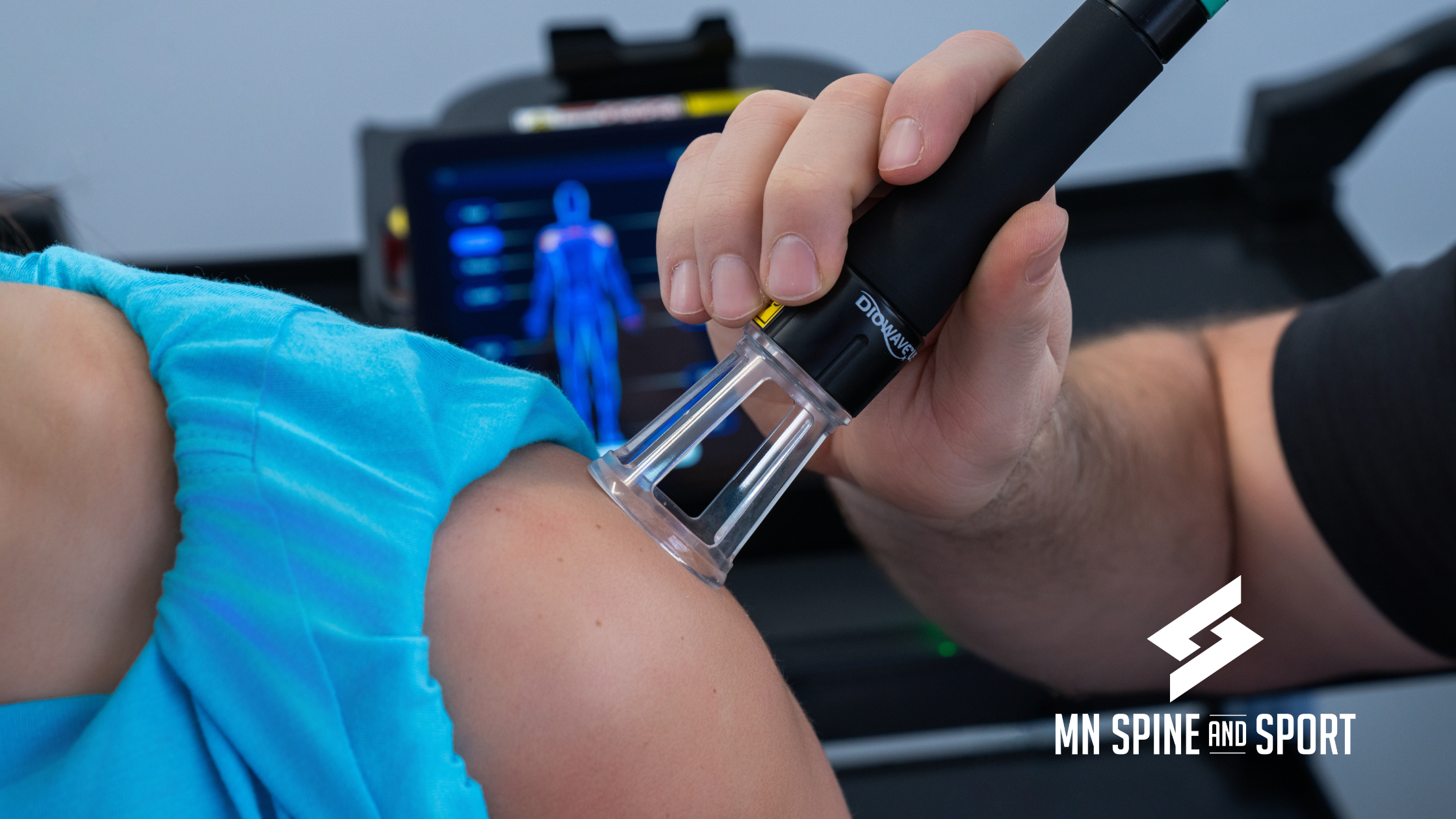
- Laser therapy
- PEMF therapy
- Shockwave therapy
- Spinal decompression / traction
- NormaTec recovery compression
How we use them (the philosophy):
- Reduce pain and stiffness enough to move well
- Restore mobility and tissue quality where needed
- Build strength, control, and tolerance progressively
- Re-test outcomes so you can see objective progress
The Most Common “Recovery Accelerators” We Recommend (Simple, Powerful)
If you want the highest return-on-effort actions, these tend to matter most:
- Keep moving daily (even if it’s light): walking, mobility, gentle patterns
- Do your rehab consistently (frequency beats intensity early)
- Sleep like it matters (because it does)
- Fuel healing (especially protein + adequate calories)
- Progress gradually (no sudden spikes in load)
- Address fear and confidence (graded exposure builds trust in your body)
Bottom Line
Recovery slows down when the body is underfueled, underslept, overprotected, overpushed, or when the plan doesn’t match the real driver of pain. Recovery speeds up when you combine the right diagnosis, progressive loading, consistent rehab, and supportive strategies like sleep and nutrition—often with modalities used strategically to help you tolerate the process.
If you want help building a plan that fits your body and your goals, MN Spine and Sport is here to help you Move Better. Feel Better. Live Better.
Footnotes (Sources)
- “Nutrition and Physical Activity in Musculoskeletal Health.” MDPI (review).
- “Nutritional Considerations and Strategies to Facilitate Injury Recovery and Rehabilitation.” UNC Sports Medicine Institute (PDF).
- “The relationship between psychosocial factors and reported disability…” BMC Musculoskeletal Disorders (Springer).
- “Psychosocial factors associated with change in pain and disability…” SAGE Open Medicine (PDF).
- “Current Concepts in Rehabilitation Protocols to Optimize Patient…” Journal of Hand Surgery / ScienceDirect (rehab concepts; immobilization concerns).
- “Effectiveness of early versus delayed rehabilitation following rotator cuff repair: systematic review and meta-analyses.” PLOS ONE (2021).
- “Comparison of Early versus Traditional Rehabilitation Protocol…” Journal of Clinical Medicine (MDPI umbrella review).
- “Effects of early exercise and immobilization after …” BMC Musculoskeletal Disorders (Springer).
- MN Spine and Sport website — services/modality list.
- “MN Spine and Sport: Move Better, Live Better.” Woodbury Magazine (modalities overview).