


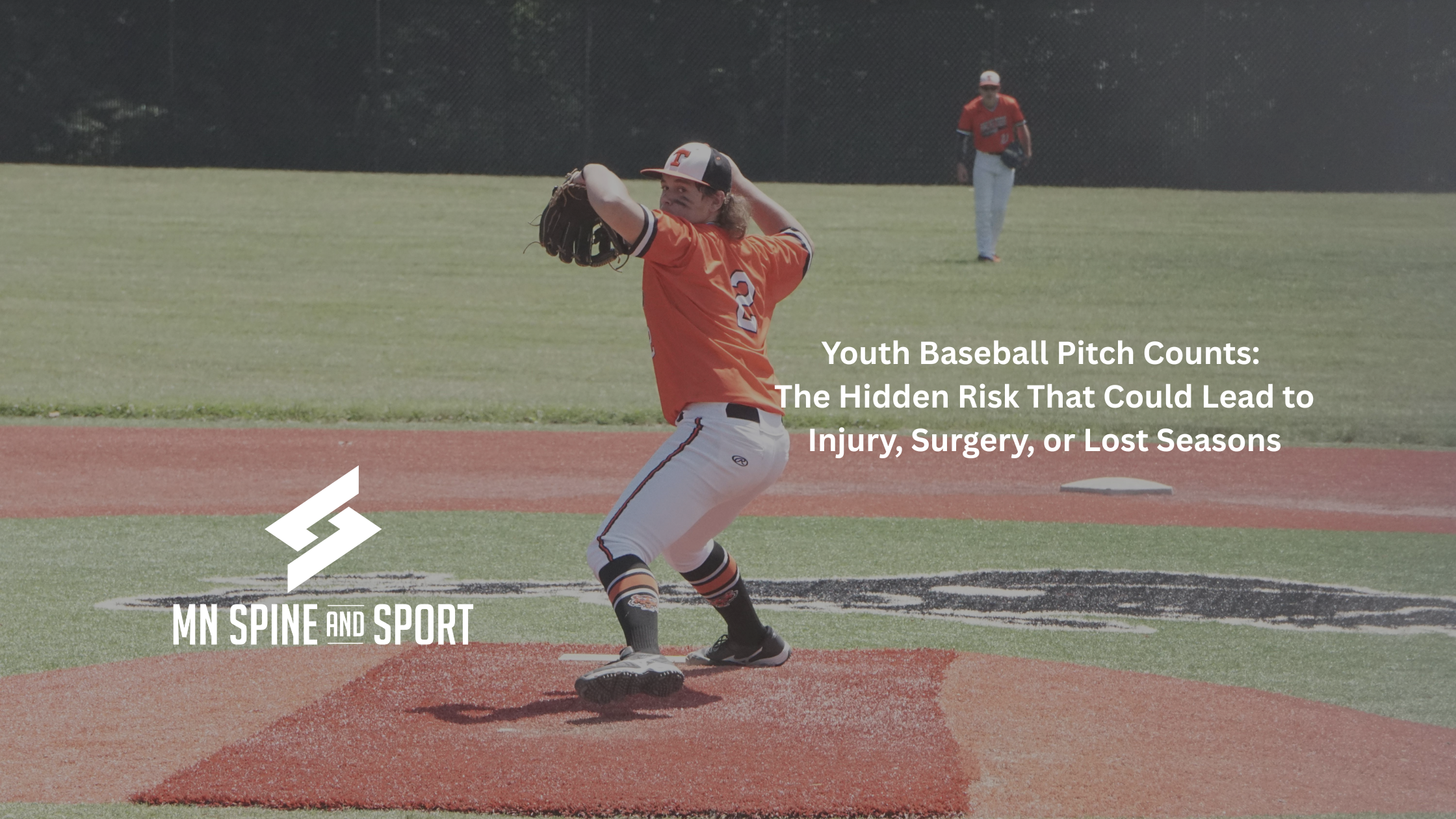
Youth baseball is more competitive than ever, especially for families in Woodbury and the surrounding Minnesota communities. Young athletes are playing on multiple teams, attending private lessons, and competing year-round in hopes of gaining an edge. While that level of commitment is admirable, it has created a serious and often overlooked problem. The biggest threat to young pitchers is not a lack of talent or effort. It is overuse, specifically the failure to properly manage pitch counts and total throwing workload. What looks like dedication on the surface can quietly lead to elbow pain, shoulder injuries, and even surgery if not addressed early.
Pitching is one of the most physically demanding movements in all of sports. Each throw places significant stress on the shoulder and elbow, including the muscles, tendons, ligaments, and in younger athletes, the growth plates. When that stress is repeated hundreds or thousands of times without proper recovery, the body begins to break down. Research consistently shows that overuse is the leading cause of youth baseball injuries, particularly conditions like Little League elbow, rotator cuff tendinitis, and ulnar collateral ligament injuries, commonly associated with Tommy John surgery. Fatigue plays a major role in this process. As pitchers tire, their mechanics begin to break down, which increases stress on the structures that stabilize the arm. This is exactly why pitch counts are so important. They are one of the most effective tools we have to monitor fatigue and reduce injury risk in youth athletes.
To help address this issue, Major League Baseball and USA Baseball developed the Pitch Smart guidelines. These evidence-based recommendations are designed to protect young arms and reduce the risk of overuse injuries. They are based on years of biomechanical research and injury data, and they provide clear limits on how much a player should throw, along with how much rest they need afterward.
Daily Pitch Count Limits by Age
- Ages 7–8: 50 pitches
- Ages 9–10: 75 pitches
- Ages 11–12: 85 pitches
- Ages 13–14: 95 pitches
- Ages 15–16: 95 pitches
- Ages 17–18: 105 pitches
Required Rest Based on Pitch Count
Ages 7–14:
- 1–20 pitches: 0 days rest
- 21–35 pitches: 1 day rest
- 36–50 pitches: 2 days rest
- 51–65 pitches: 3 days rest
- 66+ pitches: 4 days rest
Ages 15–18:
- 1–30 pitches: 0 days rest
- 31–45 pitches: 1 day rest
- 46–60 pitches: 2 days rest
- 61–80 pitches: 3 days rest
- 81+ pitches: 4 days rest
While many parents and coaches are aware of pitch count limits during games, one of the biggest mistakes we see is ignoring total throwing volume. A large percentage of throwing happens outside of actual game play. Warm-ups, bullpen sessions, lessons, and practice throws all add up. For example, a player who throws 60 pitches in a game may also throw 20 to 30 pitches warming up, another 20 to 40 in the bullpen, and additional throws during practice. That “60 pitch outing” can quickly turn into more than 100 total throws, which significantly increases stress on the arm. This becomes even more concerning when athletes play on multiple teams, where coaches may not be communicating and total workload goes untracked.
At MN Spine and Sport, we regularly see young athletes dealing with the consequences of this overload. Common injuries include UCL strain or tears, which can lead to Tommy John surgery, as well as Little League elbow, which affects the growth plate in younger players. Shoulder conditions such as rotator cuff tendinitis and labral injuries are also common, along with flexor-pronator strains that often serve as an early warning sign of more serious elbow issues. These injuries rarely happen overnight. They typically build gradually as the body is pushed beyond its ability to recover.
The rise in youth baseball injuries is not happening by accident. Year-round play has become the norm, and many athletes are not getting the recommended time off from throwing. The Pitch Smart guidelines suggest at least four months off per year, including two to three months with no throwing at all, yet many athletes continue playing without a true break. Early specialization is another factor, as young athletes who focus only on baseball are exposed to repetitive stress without the benefit of cross-training from other sports. On top of that, there is increasing pressure to throw harder at younger ages, which places even more stress on developing joints and tissues.
One of the most important roles a parent can play is recognizing the early warning signs of injury. Pain is never normal in youth baseball. If a player is experiencing elbow pain, shoulder discomfort, decreased velocity, loss of control, or unusual fatigue, these are all signs that something is not right. Addressing these symptoms early can prevent a minor issue from turning into a long-term injury.
Preventing youth baseball injuries requires a proactive approach. This includes tracking total throwing volume, following Pitch Smart guidelines, ensuring proper rest between outings, and avoiding participation on multiple teams at the same time. Strength training, particularly for the shoulder, core, and lower body, is also critical for improving durability and performance. Recovery strategies such as proper sleep, hydration, and mobility work should not be overlooked. Most importantly, athletes should never be encouraged to throw through pain.
Ignoring pitch counts and workload management can have long-term consequences. Young athletes may develop chronic pain, experience decreased performance, or require surgery at an early age. In some cases, they may even step away from the sport entirely. On the other hand, athletes who manage their workload effectively are far more likely to stay healthy, perform at a high level, and enjoy a longer career in baseball.
The good news is that most overuse injuries are preventable, and when caught early, they are highly treatable. Early intervention allows us to reduce recovery time, avoid more invasive treatments, and get athletes back to doing what they love.
If your child is experiencing elbow pain, shoulder pain, or decreased performance with throwing, it is important to take action now rather than waiting for the problem to worsen. At MN Spine and Sport, we specialize in helping young athletes recover from injury, improve their mechanics, and build resilience so they can stay on the field longer.
You can schedule an evaluation here:
https://mnspineandsport.com/schedule-now/
Taking action early can be the difference between a minor setback and a season-ending injury.
References
- MLB Pitch Smart. Pitch Smart Guidelines. Major League Baseball. https://www.mlb.com/pitch-smart
- USA Baseball Medical & Safety Advisory Committee. Youth Baseball Safety Recommendations.
- Fleisig GS, Andrews JR. Prevention of elbow injuries in youth baseball pitchers. Sports Health. 2012;4(5):419–424.
- Fleisig GS, Andrews JR, Cutter GR, et al. Risk of serious injury for young baseball pitchers: a 10-year prospective study. Am J Sports Med. 2011;39(2):253–257.
- Olsen SJ, Fleisig GS, Dun S, Loftice J, Andrews JR. Risk factors for shoulder and elbow injuries in adolescent baseball pitchers. Am J Sports Med. 2006;34(6):905–912.
- Lyman S, Fleisig GS, Andrews JR, Osinski ED. Effect of pitch count and mechanics on elbow pain. Am J Sports Med. 2002;30(4):463–468.
- Jayanthi NA, Pinkham C, Dugas L, Patrick B, Labella C. Sports specialization in young athletes. Sports Health. 2013;5(3):251–257.
- Cain EL Jr, Andrews JR, Dugas JR, et al. UCL reconstruction outcomes. Am J Sports Med. 2010;38(12):2426–2434.
- Harada M, Takahara M, Mura N, et al. Elbow injuries in young baseball players. J Shoulder Elbow Surg. 2010;19(4):502–507.
- American Academy of Pediatrics. Baseball injuries in children. Pediatrics. 2012;129(3):e842–e856.
- American Sports Medicine Institute. Youth Throwing Recommendations. https://www.asmi.org
- Makhni EC, Lee RW, Morrow ZS, et al. Outcomes after Tommy John surgery. Sports Health. 2014;6(2):123–128.